

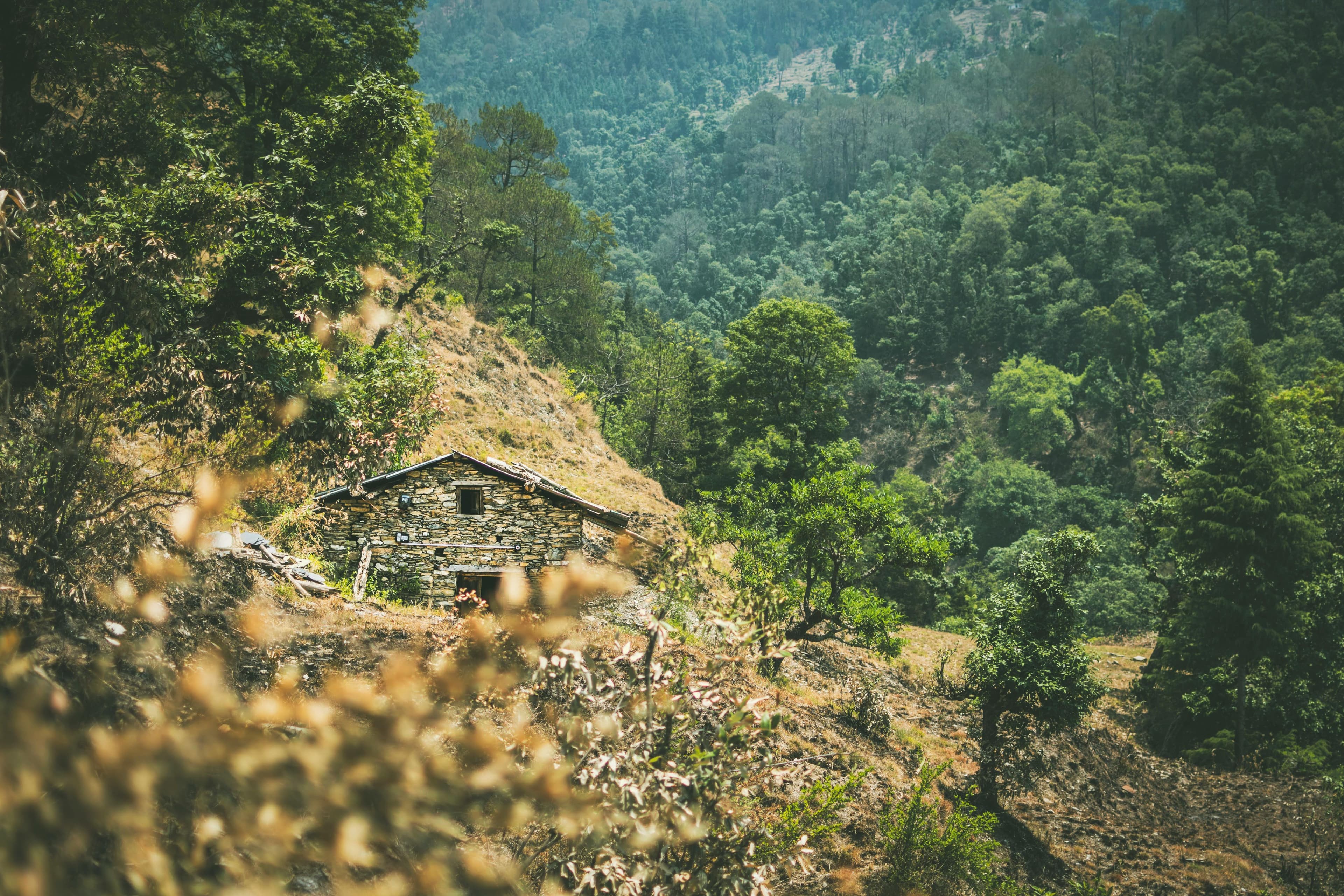
Protecting a home against wildfires requires a combination of managing the surrounding terrain, treating exposed surfaces with fire retardant and carrying out regular preventive maintenance. In Portugal, where the fire season runs from June to October and a single wildfire burned more than 64,000 hectares in 2025, residential protection is not a luxury — it is a necessity.
This guide sets out the practical steps any homeowner can take to significantly reduce the risk of wildfire damage.
Why is fire protection urgent in Portugal?
Portugal endured its worst fire season on record in 2025. According to the European Forest Fire Information System (EFFIS), the European Union recorded over 1 million hectares burned that year — with Portugal and Spain among the hardest-hit countries.
The factors that increase risk:
- Climate change: Longer, hotter and drier summers
- Wildland-urban interface: Many homes in Portugal are surrounded by combustible vegetation
- Biomass accumulation: Lack of forest management increases fuel load
- Topography: Steep slopes accelerate fire spread
The good news: studies show that homes with adequate defensible zones and surfaces treated with fire retardant are significantly less likely to suffer structural damage in the event of a wildfire.
Step 1: Create a defensible zone (fuel management strip)
The defensible zone is the cleared area around the home that prevents fire from directly reaching the structure. Portuguese law (Decree-Law No. 82/2021) requires a fuel management strip of at least 50 metres in wildland-urban interface zones.
What to do:
- 0–10 metres (immediate zone): Remove all dry vegetation, accumulated leaves and dead branches. Keep grass cut below 5 cm. Do not store firewood, gas or flammable materials next to the house.
- 10–30 metres (intermediate zone): Space trees so that their canopies do not touch (minimum 4 metres between canopies). Remove dry shrubs. Prune low branches up to 2–3 metres in height.
- 30–50 metres (outer zone): Reduce vegetation density. Create discontinuities in the vegetation that act as natural barriers.
Practical tip:
Clearing the defensible zone should be done before May, ahead of the fire season. A monthly inspection during the summer ensures the zone remains effective.
Step 2: Treat wooden surfaces with fire retardant
Wood is one of the most fire-vulnerable materials — balconies, window frames, shutters, decking and cladding are critical weak points. A fire retardant creates a chemical or thermo-responsive barrier that delays ignition and slows the spread of flames.
How to choose a fire retardant:
| Criterion | What to look for |
|---|---|
| Toxicity | Prefer non-toxic, water-based retardants that are safe for people, animals and plants |
| Biodegradability | Essential for outdoor and forestry applications. Prevents soil contamination |
| European registration | Check REACH compliance and ECHA registration |
| Mode of action | Thermo-responsive retardants (such as Sallus Retardant) react automatically to heat |
| Coverage | Calculate the area to be treated. Typically 4 m²/litre for wood (calculator) |
| Durability | Quality retardants remain effective for weeks to months |
How to apply:
- Clean the surface: remove dirt, dust and debris
- Apply the retardant with a sprayer, brush or roller in an even coat
- Allow to dry completely (normally 2–4 hours)
- On exterior surfaces, reapply every 4–6 weeks or after prolonged heavy rain
Sallus Retardant, for example, uses a thermo-responsive technology that automatically forms a protective barrier when the temperature rises — absorbing thermal energy and releasing water vapour to slow the spread of fire.
Step 3: Protect the roof
The roof is the largest exposed surface of the house and the most vulnerable point to embers and firebrands carried by the wind (which can travel up to 2 km ahead of the fire front).
Essential measures:
- Clean gutters and downpipes regularly. Accumulated leaves are fuel
- Seal openings: Install metal mesh (mesh < 3 mm) over vents and loft openings
- Treat structural timber: Beams, battens and loft window frames with fire retardant
- Check tiles: Replace broken tiles that expose the timber structure
Step 4: Protect windows and openings
Windows are weak points — the radiant heat from a nearby fire can shatter single-glazed glass, allowing flames to enter.
- Double or tempered glazing: Withstands higher temperatures
- External shutters: Preferably metal or wood treated with fire retardant
- Close everything: In the event of a warning, close all windows, shutters and doors to prevent embers from entering
Step 5: Protect ornamental vegetation
Hedges, shrubs and climbing plants next to the house act as fuel bridges that conduct fire to the structure. Rather than removing them (which is not always desirable), they can be treated.
- Spray vegetation near the house with fire retardant. Sallus Retardant can be applied directly to living plants without harming them, as it is biodegradable and non-toxic
- Choose less flammable species: Bay laurel, strawberry tree and rosemary are more resistant than pine and eucalyptus
- Keep hedges trimmed to a minimum distance of 1.5 metres from walls
Step 6: Prepare an emergency plan
Physical protection must be complemented by operational preparedness:
- Emergency kit: Documents, medication, water, torch, radio
- Evacuation route: Define and practise the exit route with the whole family
- Water points: Keep water tanks accessible (minimum 1,000 litres recommended)
- Contacts: Emergency numbers displayed visually (112, local fire brigade, civil protection)
Step 7: Ongoing maintenance
Fire protection is not a one-off action — it is a continuous cycle:
| Frequency | Action |
|---|---|
| Weekly (Jun–Sep) | Inspect defensible zone, remove accumulated dry vegetation |
| Monthly | Clean gutters, check the condition of treated surfaces |
| Every 4–6 weeks | Reapply fire retardant on exterior surfaces |
| Before summer (April–May) | Full clearance of defensible zone, complete surface treatment |
| After storms/heavy rain | Check and reapply retardant where necessary |
How much does it cost to protect a home?
The investment in fire protection is modest compared with the potential cost of damage:
| Item | Estimated Cost |
|---|---|
| Clearing defensible zone (50 m) | Variable (labour or DIY) |
| Fire retardant (1 L = ~4 m²) | From ~EUR 15 |
| Fire retardant (5 L = ~20 m²) | From ~EUR 65 |
| Fire retardant (25 L = ~100 m²) | From ~EUR 250 |
| Metal mesh for openings | EUR 20–50 per opening |
| Fireproof shutters | EUR 200–500 per window |
For a typical house with 50 m² of exposed wooden surfaces, the cost of fire retardant treatment is around ~EUR 163 — a fraction of the rebuilding cost. You can use our coverage calculator to estimate the quantity and cost for your situation.
Conclusion
Protecting your home against wildfires does not require large investments — it requires planning, action and maintenance. The combination of a well-managed defensible zone, surfaces treated with fire retardant and operational preparedness drastically reduces the risk of damage.
The most important thing is to start before the fire season. If you live in a wildland-urban interface zone in Portugal, the time to act is now.
Article reviewed by Henrique Bastos, CTO of Hephaesnus and PhD in Chemical Engineering.