
A fire retardant for wood is a product that, when applied to wooden surfaces, delays their ignition and the spread of flames. It is the most practical and cost-effective way to increase the fire resistance of existing wooden structures — balconies, decking, window frames, shutters, cladding and pergolas.
In this guide, we explain the different types of wood fire retardants, how to choose the most suitable one for each situation and how to apply them correctly to ensure maximum effectiveness.
Why does wood need fire protection?
Wood is a combustible material with a typical ignition temperature of between 250 and 300 degrees Celsius. In a wildfire, temperatures can exceed 800 degrees C at the flame front — and embers and firebrands carried by the wind can reach wooden surfaces hundreds of metres away.
The most vulnerable wooden surfaces in a home:
| Surface | Risk | Reason |
|---|---|---|
| Decking/Balcony | Very High | Large exposed area, horizontal (accumulates embers) |
| Window frames | High | Exposed to radiant heat |
| Shutters | High | First line of protection for windows |
| Exterior cladding | High | Large area, direct exposure |
| Eaves and soffits | High | Accumulate embers, ventilation feeds fire |
| Pergolas | Medium-High | Open structure, total exposure |
| Fences | Medium | Can act as fire conductors |
| Outdoor furniture | Medium | Additional combustible material near the house |
Types of fire retardant for wood
1. Surface retardants (topical application)
Applied over the wood like a paint, varnish or spray. They protect the outer layer.
Subtypes:
| Type | Action | Appearance | Durability | Application |
|---|---|---|---|---|
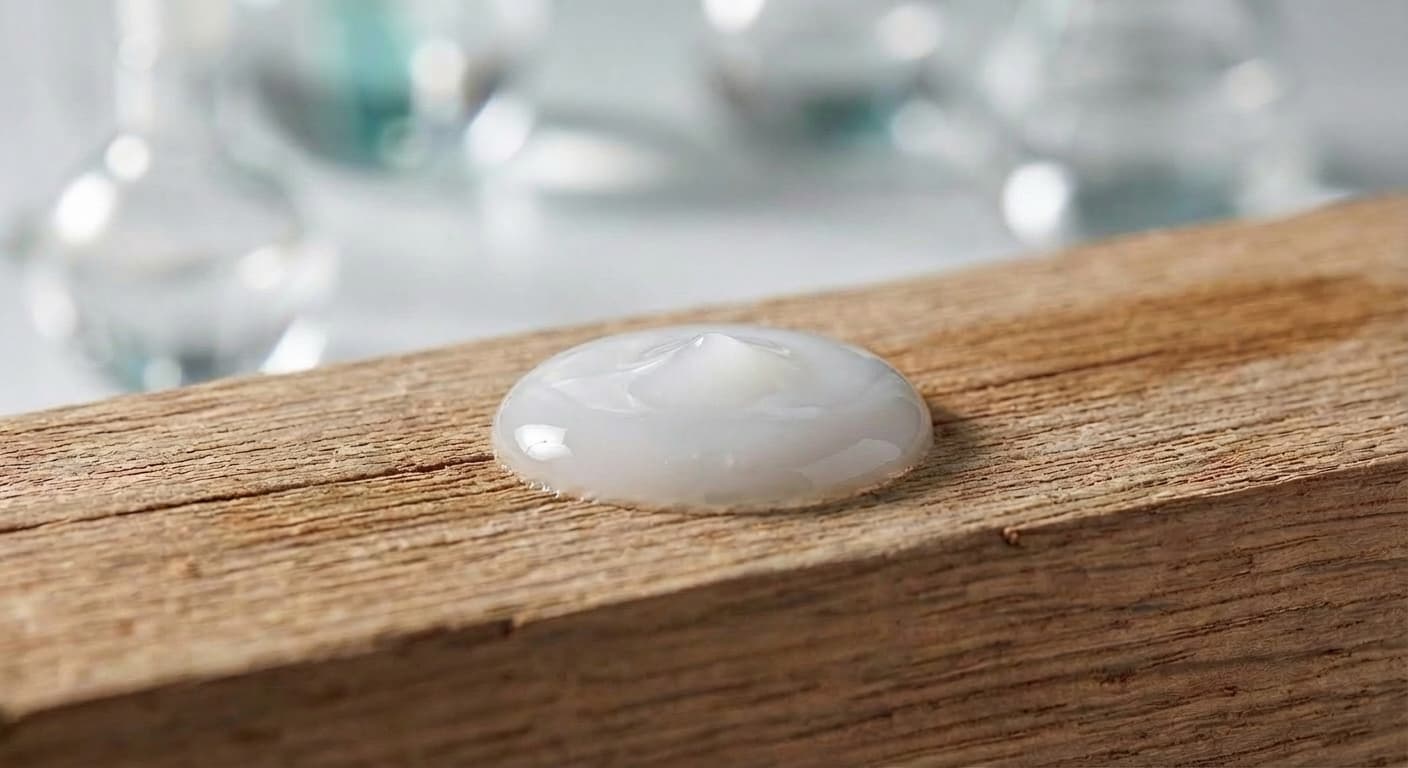
| Thermo-responsive gel | Activates automatically with heat, absorbs energy and releases vapour | Invisible and odourless after drying | 4–8 weeks (exterior) | Sprayer, brush or roller |
| Intumescent paint | Expands with heat, creates insulating layer | Looks like normal paint | 5–10 years (interior) | Brush or roller (2–3 coats) |
| Fire-resistant varnish | Physical barrier + chemical retardation | Transparent, gloss or matt | 2–5 years | Brush or spray |
| Retardant spray | Surface impregnation | Invisible | 4–8 weeks (exterior) | Sprayer |
2. Impregnation retardants (deep treatment)
The wood is immersed or injected under pressure with a retardant solution. The treatment penetrates deep into the fibres.
- Advantage: Long-lasting protection (10+ years)
- Limitation: Requires industrial equipment. Only possible before the wood is installed
- Typical use: Structural timber in new construction, decking timber (factory treatment)
3. Chemical vs natural retardants
| Aspect | Chemical Retardants (halogenated) | Natural Retardants (water-based) |
|---|---|---|
| Efficacy | Very high | High |
| Toxicity | Potentially toxic | Non-toxic |
| Biodegradability | No. Persistent in the environment | Yes. Natural decomposition |
| EU regulation | Being restricted (REACH) | Compliant |
| Safe for plants | Not recommended | Safe |
| Cost | Variable | Moderate |
| Market trend | Declining | Growing (halogen-free +3.9% CAGR) |
The EU is progressively restricting halogenated retardants. The market trend is clearly towards non-toxic and biodegradable retardants — the halogen-free segment is already the largest in the European market.
How to choose the right retardant for your situation
Scenario 1: Seasonal exterior protection (home in a risk zone)
- Recommended: Thermo-responsive gel or water-based retardant spray
- Reason: Easy DIY application, non-toxic, biodegradable, rapid coverage of large areas
- Reapplication: Every 4–6 weeks during the fire season
- Cost: ~EUR 3.25/m² with a product like Sallus Retardant 5L (5 L covers ~20 m²)
Scenario 2: Interior structural timber
- Recommended: Intumescent paint or fire-resistant varnish
- Reason: Long-lasting protection, aesthetic finish, does not require frequent reapplication
- Reapplication: Every 5–10 years or as per manufacturer's specification
- Cost: EUR 15–30/m² (including labour)
Scenario 3: Wooden decking or pergola
- Recommended: Thermo-responsive gel for seasonal maintenance + fire-resistant varnish as a base coat
- Reason: Decking is a horizontal surface that accumulates embers. It needs dual protection
- Reapplication: Varnish as per manufacturer + gel every 4–6 weeks in summer
- Cost: Base varnish + ~EUR 3.25/m² per gel application
Scenario 4: New build or renovation
- Recommended: Factory-treated timber (pressure impregnation)
- Reason: Long-lasting structural protection integrated into the material
- Reapplication: Not required (10+ years)
- Cost: 20–40% premium over untreated timber
Step-by-step guide: how to apply fire retardant to wood
Materials needed
- Fire retardant (calculate the area: typically 4 m²/litre for wood)
- Pressure sprayer (for large areas) or brush/roller (for specific areas)
- Protective gloves (as a precaution, even with non-toxic products)
- Clean cloth
- Masking tape (for surfaces that should not be treated)
Step 1: Prepare the surface
- Clean the wood: remove dust, dirt, debris, moss or mould
- If the wood has old peeling paint or varnish, sand lightly
- The wood should be dry to the touch (do not apply on wet wood)
- Mask off areas that should not receive the product (glass, hardware) with tape
Step 2: Prepare the product
- Shake or mix the retardant as per the manufacturer's instructions
- Most water-based retardants (such as Sallus Retardant) are ready to use. No dilution required
- Check the ambient temperature: ideally between 10 and 35 degrees C, with no rain forecast in the next 4 hours
Step 3: Apply
With a sprayer:
- Hold the nozzle 20–30 cm from the surface
- Apply in even strokes, horizontal or vertical
- A single even coat is sufficient. Avoid excess that causes drips
- Cover the entire surface, including edges and joints
With a brush or roller:
- Apply in an even coat, following the grain of the wood
- Ensure complete coverage without leaving untreated areas
- For vertical surfaces, work from top to bottom
Step 4: Drying
- Typical drying time: 2–4 hours (depending on temperature and humidity)
- The product becomes invisible and odourless after complete drying
- Do not expose to rain or water during the drying period
- Check that the entire surface is evenly dry before use
Step 5: Check and record
- Visually inspect the entire treated surface
- Note the date of application to track reapplication
- In a professional or insurance context, photograph the application process
Frequently asked questions
Does fire retardant change the appearance of wood?
Water-based retardants and thermo-responsive gels dry invisibly and without odour — they do not alter the colour, texture or appearance of the wood. Intumescent paints and fire-resistant varnishes do change the appearance (like any paint or varnish).
Can I apply retardant over wood that is already painted or varnished?
It depends on the type. Thermo-responsive gels and water-based sprays can be applied over most existing finishes. Intumescent paints normally require a clean, prepared surface. Always consult the manufacturer's instructions.
Does fire retardant leave stains?
Quality water-based retardants do not leave stains. If you notice white residue, it is usually excess product that can be wiped away with a damp cloth before complete drying.
How much product do I need?
The typical coverage for wood is 4 m² per litre. To calculate:
- Measure the total area of wood to be treated (width x height of each surface)
- Divide the total area by 4 to get the litres needed
- Add 10–15% margin for waste and joints
Practical example:
- Decking of 20 m² + balcony of 8 m² + shutters of 4 m² = 32 m²
- 32 / 4 = 8 litres needed
- With margin: ~9 litres
- Solution: 2x Sallus Retardant 5L = 10 L (40 m² coverage)
For a quick personalised calculation, try our coverage calculator.
How often should I reapply?
- Exterior: Every 4–6 weeks during the fire season, or after prolonged heavy rain
- Interior: Every 3–6 months, or as per manufacturer's instructions
- After washing: Reapply immediately if the surface has been pressure washed
Conclusion
Protecting wood against fire is a simple, affordable and effective preventive measure. For homeowners in wildfire risk zones, regularly treating wooden surfaces with fire retardant is one of the most impactful actions they can take — at a cost of between EUR 2.50 and EUR 3.75/m² per application, depending on the format chosen.
The most important thing is to choose a retardant suited to the situation (type of wood, interior vs exterior, exposure), apply it correctly and maintain a reapplication schedule during the fire season. For a complete guide to residential protection, see our article on how to protect your home against wildfires.
Article reviewed by Henrique Bastos, CTO of Hephaesnus and PhD in Chemical Engineering.