When a fire occurs, every second counts. If you live in a zone with a high wildfire risk, protecting your home, garden and relatives is crucial. But how can you actively prepare yourself to stop a fire's progression?
That is where fire retardants step in. When applied correctly, these can buy you critical time.
In this guide, we break down some of the science behind how these life-saving treatments delay or prevent ignition, compare different types on the market, and show you why next-generation solutions like Sallus Fire Retardant offer the ultimate defense for your property in an eco-friendly manner.
Key Takeaways
- The Core Purpose: A fire retardant is a targeted substance applied to a material to delay or entirely prevent its ignition and stop the destructive spread of flames.
- The Mechanism: Modern retardants work through precise chemical or physical reactions that absorb thermal energy, block oxygen, or build an impenetrable insulating barrier.
- The Safe Alternative: Legacy industrial chemicals are toxic, but next-generation thermo-responsive hydrogels (like Sallus) are 100% biodegradable, non-toxic, and safe for your pets, family, and garden plants.
- Regulatory Compliance: Always look for official European Chemicals Agency (ECHA) registration, REACH compliance, and absence of per- and polyfluoroalkyl substances (PFAS) and volatile organic compounds (VOCs).
Understanding the Fundamentals to Stop a Fire
To understand how we stop a fire, we must look at how a fire functions. Historically, this has been explained using the fire triangle, consisting of three elements: Fuel, Oxygen and Heat.
However, modern fire science expands this into the Fire Tetrahedron by adding a fourth, critical element: the uninhibited chemical chain reaction.
- Fuel: the material that burns (wood, vegetation, fabrics)
- Oxygen: present in the air
- Heat: the energy needed to start and sustain combustion
- Chain Reaction: the continuous interaction between free radicals released from burning fuel, which react to generate more heat in a feedback loop
A highly effective fire retardant works by interfering with one or more of these elements through targeted mechanisms:
| Mechanism | How it works | Example |
|---|---|---|
| Heat absorption / Endothermic cooling | Absorbs massive amounts of thermal energy, releasing water vapor to prevent the material from reaching its ignition temperature. | Water-based and thermo-responsive retardants |
| Physical barrier / Intumescence | The material swells when heated, forming an insulating layer of carbonized foam between the flames and the material. | Specialty coatings |
| Gas-phase radical scavenging | Releases gases that dilute available oxygen or interrupt the chemical reactions of combustion in the flame zone. | Halogenated retardants |
| Solid-phase charring | Promotes the formation of a carbonized surface layer that protects the underlying material from heat and traps combustible gases. | Phosphorus-based retardants |
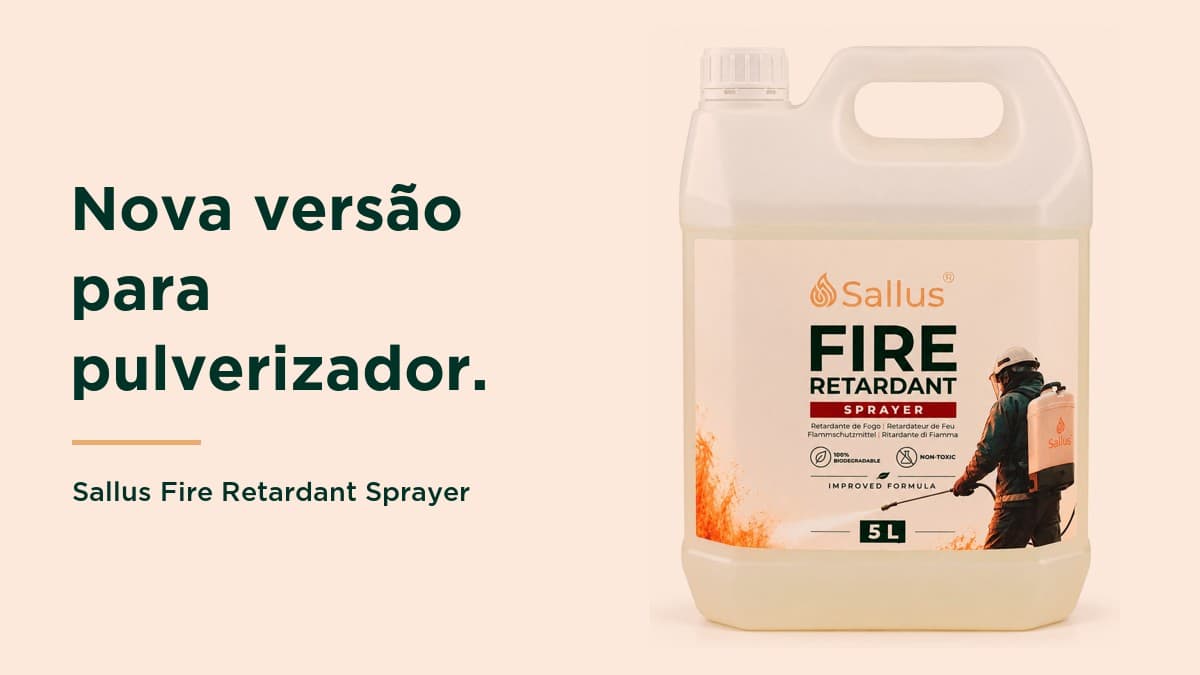
The most effective modern retardants combine several of these mechanisms. Sallus Fire Retardant, for example, uses a thermo-responsive technology that reacts automatically to rising temperature, absorbing thermal energy and releasing water vapor to create a protective barrier.
The 4 Main Types of Fire Retardants
Not all fire retardants are created equal. The industry categorizes them into four main groups, each suited to specific materials and scenarios.
1. Water-Based Retardants
- Composition: Water acting as a carrier, mixed with chemical additives like salts and surfactants.
- How they work: The evaporation of the water absorbs significant thermal energy.
- Advantages: Non-toxic, biodegradable, and very easy to apply.
- Applications: Wooden surfaces, vegetation, and broad forest protection.
2. Intumescent Retardants
- Composition: Specialty paints or coatings containing highly specific compounds that expand with heat.
- How they work: Upon reaching a critical activation temperature of ~200–300°C, the coating rapidly expands, forming an incredibly tough, insulating carbonized foam.
- Advantages: Aesthetically pleasing (resembles normal paint) and provides long-lasting protection.
3. Halogenated Retardants (Legacy Technology)
- Composition: Compounds containing heavy halogens like bromine or chlorine.
- How they work: When heated, they release radicals that aggressively interrupt the chemical chain reaction of combustion. Chemically, they scavenge the reactive hydrogen and hydroxyl radicals propagating the flame.
- Limitations: While highly effective in small quantities, they persist in the environment, bioaccumulate, and are being heavily restricted in the EU under REACH regulations due to potential toxicity.
4. Thermo-Responsive Retardants (Smart, Next-Gen Technology)
- Composition: Advanced water-based gels fortified with compounds that react dynamically to heat.
- How they work: Advanced, clean water-based gels formulated with eco-friendly polymers that respond dynamically to ambient heat signatures.
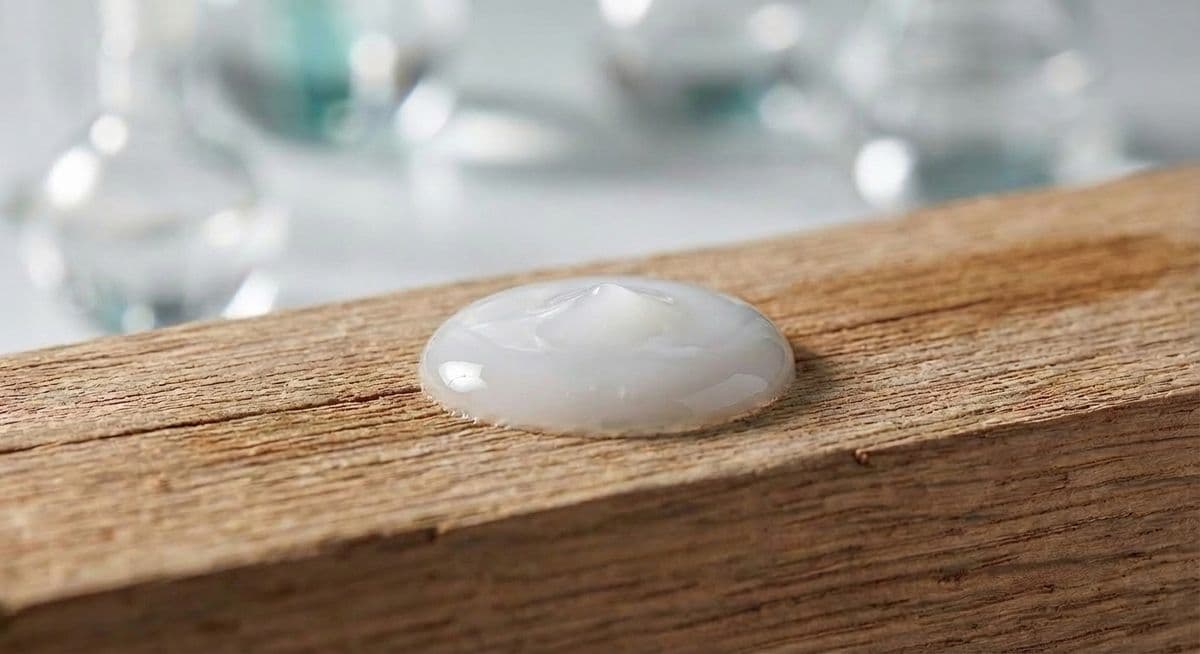
- The Action: It sprays on smoothly to form a completely clear, invisible protective layer. The moment intense wildfire heat strikes, the thermo-responsive matrix automatically activates, expanding, locking in moisture, absorbing thermal energy, and releasing a dense layer of water vapor to create an impenetrable thermal shield.
- Why it is the right solution: Sallus Fire Retardant falls into this category. It is a water-based, non-toxic, biodegradable gel that reacts automatically to rising temperatures. It is fully registered with the ECHA in compliance with REACH, and has no PFAS nor VOCs.
Is Fire Retardant Toxic?
It depends on the type. Halogenated retardants are being progressively restricted in the European Union due to concerns about human health and the environment. They are persistent in soil and water and can bioaccumulate.
Modern water-based retardants, such as thermo-responsive ones, are engineered for improved safety. They are designed to be non-toxic to people and pets, biodegradable, free of harmful VOCs and PFAS, and safe enough to be applied to living plants.
The Sallus Safety Guarantee
Unlike hazardous legacy chemicals, Sallus Fire Retardant is engineered for safe, residential use. Our eco-friendly formulation is entirely:
- 100% Non-Toxic to humans, pets, and local wildlife.
- Fully Biodegradable, breaking down naturally without leaving hazardous chemical residues in your soil or water.
- Completely Free of Harmful VOCs and PFAS, making it safe for both indoor and outdoor applications.
- Vegetation-Safe, meaning you can spray it directly onto living hedges, ornamental shrubs, and trees near your home to create an active barrier without harming your landscaping.
When protecting your property, always check the label for:
- Registration with the ECHA (European Chemicals Agency)
- REACH compliance
- Absence of hazardous substances
- Unique Formula Identifier (UFI) on the label and Safety Data Sheet (SDS) access for transparency
Durability & Application: Protecting Your Property
Fire retardants are commonly used in residential, forestry and industrial protection. Their durability depends on the type of retardant and the conditions to which they are exposed.
You can find typical durability per type below, although periodic reapplication is recommended, especially for exterior applications or after prolonged heavy rain.
| Type | Typical Durability | Conditions |
|---|---|---|
| Intumescent (paint) | 5–10 years | Interior, no direct exposure |
| Water-based (interior) | 3–6 months | Without washing |
| Water-based (exterior) | 4–8 weeks | Exposure to rain and sun |
| Industrial treatment | 10+ years | Deep impregnation |
Creating Your Defensible Perimeter
To get the most out of your Sallus Fire Retardant, systematically treat the areas where wildfires typically bridge the gap to residential structures:
- Structural Wood: Thoroughly spray wooden balconies, decking, pergolas, window frames, shutters, and exterior cladding.
- The Wildland-Urban Interface (WUI): Treat fuel management strips, perimeter fencing, and rural property borders.
- Living Fuel Sources: Coat the hedges, dense shrubs, and ornamental garden vegetation directly surrounding your immediate living spaces to cut off the fire's path.
Pro-Tip for the Fire Season: For exterior applications, your protective layer faces constant degradation from intense UV rays and weathering. To keep your property completely safe, apply your first coat at the start of the dry season and commit to a quick reapplication every 2 weeks, or immediately following any prolonged heavy rainfall.
Fire Retardant vs. Fireproof: Clearing Up the Confusion
Many homeowners use these terms interchangeably, but understanding the engineering distinction can save your home:
- Fireproof Materials: These are materials that are completely non-combustible by nature. Concrete, stone, brick, and structural steel inherently resist catching fire. However, it is extremely challenging to have a property completely built of fireproof materials.
- Fire Retardants: These are advanced chemical treatments applied post-manufacture to turn naturally combustible materials (like wood, fabrics, and dry vegetation) into fire-resistant surfaces.
Ultimately, real security doesn't rely on just one or the other. The most effective wildfire defense plan combines your home's existing structural elements with the proactive surface treatment of all surrounding combustible elements using Sallus Fire Retardant.
Secure Your Property Before the Smoke Appears
Wildfires move with terrifying speed, but they can be stopped when they hit a fire retardant barrier.
Waiting for the evacuation order to clear your brush or think about protection is a gamble you don't have to take. Investing in the preventive treatment of your exposed wooden structures and surrounding garden beds is the single most cost-effective, high-yield safety measure a homeowner can implement.
With Sallus Fire Retardant, you don't have to choose between absolute safety and environmental ethics. Our premium, water-based, thermo-responsive hydrogel gives your home a world-class thermal armor while remaining completely gentle on your family, pets, and prized plants.
Don't wait for fire season to peak. Head over to our Sallus Fire Retardant page to calculate exactly how much coverage your property needs, choose between our residential and bulk options, and secure your home's active defense perimeter today.
Article reviewed by Henrique Bastos, CTO of Hephaesnus and PhD in Chemical Engineering.